Akriti Vasudeva, Fellow, South Asia Program, Stimson Center (Moderator): All right, good morning, good afternoon, and good evening everyone, wherever you’re joining us from. My name is Akriti Vasudeva Kalyankar. I’m the editor-in-chief of South Asian Voices, which is our online policy platform featuring analysis in the security, politics, and economics of the subcontinent. Thank you so much for tuning in, and welcome to the South Asian Voices event on the Taliban’s regional realignments and the future of Afghanistan’s international engagement.
Today marks four years since the Taliban regime seized Kabul and took over Afghanistan, dramatically altering the domestic landscape, regional geopolitics, and security dynamics across the region. Four years on, the country’s economic recovery is precarious, restrictions on women and girls remain, and security concerns persist due to the presence of regional and global terrorist groups. While the Taliban regime’s inability to restrain some of these groups, and unwillingness to act against others, has exacerbated tensions across the region and beyond, there are opportunities for engagement that have emerged because of Afghanistan’s relative stability.
So our conversation today, which is based on a South Asian Voices series of the same name, will explore Afghanistan’s regional ties under Taliban rule, how the group’s evolving priorities are reshaping diplomatic calculations in the neighborhood, and what is the state of relations with key global powers as we talk today. And to have this conversation, I’m delighted to be joined by a stellar panel of experts, whom I will introduce one by one now.
First, Ambassador Youssof Ghafoorzai is a career diplomat with over two decades of experience in multilateral diplomacy and international policy development. He’s a former ambassador of Afghanistan to Norway, and he spent several years engaged in multilateral diplomacy, including several tenures at Afghanistan’s permanent mission to the United Nations in New York. He has also served several postings as advisor on international affairs at the Ministry of Foreign Affairs.
Next we have Amina Khan. She’s the director of the Center for Afghanistan, Middle East, and Africa at the Institute of Strategic Studies, Islamabad. Over a period of more than 19 years, she has published extensively on Afghanistan and has presented her research at multiple national and international fora. She’s also the author of four edited books.
Shalini Chawla is next. She is a distinguished fellow at the Center for Air Power Studies in New Delhi. She has published more than 120 research articles and chapters, and authored seven books relating to defense and security issues, particularly on India, Pakistan, and Afghanistan, and she’s been an active participant of Track 1.5 talks, and has been engaged in bilateral talks between India and Afghanistan. And she was just telling us a little bit earlier that she has been working on these issues for over 20 years, so really a pleasure to have you Shalini.
Shalini Chawla, Distinguished Fellow, Centre for Air Power Studies: Thank you.
Akriti Vasudeva: Then we have my colleague Sarah Godek, who is a research associate with the China program at the Stimson Center. Her research focuses on US-China relations and China’s foreign policy, and she was a foreign language and area studies graduate fellow for Mandarin Chinese at the University of Michigan.
Last but certainly not least, we have Sibghatullah Ghaznawi. He’s an associate research scholar at the Saltzman Institute of War and Peace Studies at Columbia University, focusing on political stability in post-conflict settings. And before Columbia, Sibghat was the deputy minister of municipalities and the independent director of local governance of Afghanistan.
So we have only an hour and 15 minutes, and I know some of our panelists have to leave early to get to other engagements. So what we’ll do is dispense with opening remarks, and instead I’ll post some questions of my own to each of our panelists. But I also do want the audience to engage with our experts here, so we’re going to be collecting questions throughout the session, and I’ll intersperse them into the discussion and we’ll especially get to them at the end of our conversation.
So if you want to ask our panelists something, please type your query into the Q&A box. That will be at the bottom of your Zoom screen, and we will bring them into the discussion at a relevant point. So thank you so much to all of you for joining us. I want to maybe divide this conversation into four themes. I want to start a little bit with Afghanistan’s domestic situation, and then go and talk a little bit about the nature of international engagement by the Taliban in the past four years, talk a little bit about the security situation, especially with regard to regional and global terror groups, and then move on to multilateral efforts and diplomacy and international legitimacy towards the end.
So Ambassador Ghafoorzai, I want to start with you. I think we would be remiss, especially since it is the anniversary of the Taliban regime taking over, to not talk about the domestic situation. As we stand here today, the country’s economy is still in a really precarioussituation. We see that the educational restrictions and others on women and girls continue. Socould you comment a bit on what stability in Afghanistan looks like both politically and economically, four years from the regime taking over?
Youssof Ghafoorzai, Former Afghan Ambassador to Norway: Well, thank you very much, Akriti. Thank you for the invitation to join this important discussion, and it’s a great pleasure to be with fellow friends and colleagues. But more importantly, thank you for taking the initiative… help highlight the situation of Afghanistan four years on, and also the role of the international community since the Taliban took over four years ago, and what role should be taken from here on.
In addition to a few words about the situation, I would also like to provide some recommendation thoughts in terms of what should be the international strategy from here on in order to promote stability. So I want to start by saying that these discussions at this present time are extremely pertinent as you mentioned, but at the same time the discussions are important because the decisions taken by the international community from here on will have consequences first and foremost for the Afghan people, but also for global security, for counterterrorism, and for [inaudible 00:06:35]
Before going-
Akriti Vasudeva: Ambassador Ghafoorzai, sorry to interrupt you, but we’re having some trouble hearing you. If you could maybe come closer to your screen, that would be helpful. Thank you.
Youssof Ghafoorzai: Can you hear me a bit better now?
Akriti Vasudeva: I can. I think we’re just having… maybe you’re going in and out. So if you maybe stayed put in that position, that would be helpful.
Youssof Ghafoorzai: Sure.
Again, before going further, I would like to first reflect on some of the factors that resulted in the collapse of the Republic and the crisis that emerged. I think it’s obvious that miscalculations and missed opportunities at the national level, the regional level, and the international level proved fateful in that regard. Internally, failure to strengthen political stability in the spirit of national unity, especially during the post-2014 period, in my view was one of the main issues that prevented the situation from stabilizing. Regionally, relevant states did not influence the Taliban’s decision-making by engaging sincerely in the Doha negotiations to reach the settlement that was needed, at the same time I want to emphasize, which is still needed today. Internationally, competing interest coupled with a lack of consensus on a unified strategy, and also of course the withdrawal of international forces before an agreement being reached, were other factors that contributed to what happened.
But coming specifically to the topic at hand, of course today marks four years since the Taliban’s takeover, and it’s obvious that in the past four years, both Western and regional countries have engaged with the group. I think this engagement was mainly based on the belief that the Taliban are not just a reality, but the reality to contend with. And I think it’s also safe to say that it has been generally assumed that compromise and flexibility with the group would eventually lead to progress on issues of human rights or inclusive governance, and also on counterterrorism. I think it’s obvious that engagement with the Taliban has come in different forms, including discussions in Kabul and Doha, in capitals of regional countries, but also even in some European countries. The goals, in my view, have varied. I think regional countries such as China, the Russian Federation, Pakistan, India, and those in the Central Asia region are engaging on the assumption that collaboration with the Taliban will first prevent a spillover of transnational criminal activity into their territories, and secondly that engagement will provide economic opportunities for regional integration.
On the other hand, Western countries have focused on providing humanitarian assistance, on containing the terrorist threat emanating from Afghanistan, and also trying to find ways on how to end the repressive policies the Taliban have imposed against Afghan women and girls. Meanwhile, both blocs have at times emphasized the formation of an inclusive government that can represent a cross-section of Afghanistan’s political society. But four years on, coming specifically to your first question, I think it’s obvious that the situation is very far from stable. From a security standpoint, terrorist threat emitting from Afghanistan remains very real. We have seen groups such as ISIS-K, Al-Qaeda, Tehrik-i-Taliban Pakistan still being very present and very active. And I think many of us will attest that many reports of the UN sanctions monitoring team of the Taliban Sanctions Committee have verified these indications.
Politically it’s obvious that the absence of a legitimate and inclusive government has deepened the crisis. Lack of inclusive governance has resulted in Afghanistan losing its normal standing in the international community, and also being prevented from maintaining normal state-to-state relations with countries, and obviously this is something that’s needed for stability in any country. Moreover, despite repeated calls from ordinary Afghans, and also the international community, unfortunately the Taliban are showing no interest for the resumption or start of intra-Afghan dialogues for a settlement. I do want to emphasize that when we talk about a settlement, obviously we’re talking about something that has not just eluded Afghanistan in the 20-year period of the Republic, but something that has been missing in Afghanistan for more than four decades.
From the UN perspective, several UN envoys and special representatives led efforts to reach a settlement before and after 2001, under first the UN Special Mission for Afghanistan, UNSMA, before 2001 during the 1990s, and of course after 2001 under the UN Assistance Mission for Afghanistan. From a humanitarian standpoint, the absolute majority of the population of close to 30 million, including six million IDPs, need urgent assistance. More than two million Afghans have been forced to return from Iran and Pakistan just this year alone. Of course, unfortunately that’s going to further complicate the humanitarian crisis. And I do want to say that these returns are unfortunately violating the principle of [inaudible 00:12:00] by host countries.
Meanwhile, at the same time, we have seen ordinary Afghans, the people of Afghanistan, both inside the country but also outside, not give up on securing the future that they deserve. It’s obvious that in the past four years, we have seen civil society, women’s groups, activists, but specifically a new generation of Afghan youth, do what they can to increase international attention on Afghanistan, to try and influence international actors to adopt a more effective strategy moving forward, and also to come together and form a national agenda to overcome the crisis. But the main question now is, I think, what now needs to be done, and what should be the way forward. I want to briefly highlight four points. One-
Akriti Vasudeva: Ambassador Ghafoorzai, we’ll come back to that a little bit later. Thank you so much for the initial scene setting. We’ll come back to that in the next few rounds on what should be done. Let me bring in Amina here. Ambassador Ghafoorzai, you were talking about the recognition in the region that the Taliban is the reality, and how do you deal with the regime? Amina, maybe chart for us the evolution in Pakistan’s relationship with the Taliban, right before the takeover to now. There have been several highs and lows in that relationship. What was the initial objective of Pakistan’s engagement with the Taliban, and what have been the central tensions that we saw in the relationship to now, with the seeming thaw that has emerged in the past few months?
Amina Khan, Director, Centre for Afghanistan, Middle East & Africa, Institute of Strategic Studies, Islamabad: Thank you for inviting me to be a part of this very interesting discussion. Let me just begin by saying that I think it’s important to… when we’re talking about Pakistan’s relationship with Afghanistan, I don’t think we should view it just with one particular regime or government. Because if you see the problems that have existed between both countries, have existed during the past 20 years and even now, I think the mistake that was made, I have to say on our part, was that we believed that when the Afghan Taliban come into power, Pakistan’s problems would just all of a sudden go away, particularly in terms of security and the TTP. But as you’ve seen and as you correctly mentioned, post August 2021, apart from a few brief moments of stability, generally we have seen the relationship following a very, very negative trajectory. We have seen violence across the border, we’ve seen unprecedented military deaths. And of course this has then affected the relationship.
And I think this is the mistake that has been made time and again between both countries, that the relationship has always been viewed through a very limited prism, and on our side it has always been security. Initially it was on their side. Now the tables have reversed where we’re still stuck to security, whereas for the Afghan Taliban, now it is trade. Now I think again, a mistake has been made that while we feel that security should be viewed in isolation and trade in isolation, these in fact are intertwined. And I think if both these issues are dealt with adequately, I think the relationship can move forward.
We have seen, and I’m not going to jinx it, but a slight positive improvement in the relationship, because I think this realization has come on both sides that both these issues can be dealt with collectively. However, look, the history of mistrust exists deeply, and I think unless and until both countries do not view each other as two very independent and sovereign countries, we will continue to see the relationship following this high and low trajectory.
Here I also want to add that it’s not just, again, in terms of the Taliban regime. Even if you see during the past 20 years, the relationship was always limited. And this is primarily because we have always viewed each other through the prism, again, of the historical bilateral irritants that exist, and they exist till date. And both, again, countries have made this mistake, where they haven’t actually moved towards addressing these issues. It’s surprising both these countries are so interdependent if we still don’t have a comprehensive bilateral framework to engage with each other. So whenever something does happen, and I wrote this in my piece as well, a unilateral decision is taken, which is detrimental.
There were certain instances in history, even now by the way, where both countries are trying to figure out some sort of a comprehensive bilateral framework to address each other’s problems, whether it’s trade, whether it’s refugees, whether it’s counterterrorism. But unfortunately I think we have a long way to go. And here I would just like to say that the Afghan Taliban are in power now as this discussion is taking place. They’ve been here for four years, and in any other democratic country in the world, this would be a full term. So you know, this whole excuse that the Afghan Taliban seemed to revert back to that we’re still an interim setup? I think this is becoming slightly tiresome. They have to deliver.
And I think we need to go back to something that Ambassador Ghafoorzai said regarding the Doha Agreement. Not a lot of people like to speak about it or go back to it, but I actually feelthat the only group or party that has benefited from the Doha Agreement has in fact been the Afghan Taliban. I think it’s time to hold them accountable to the pledges of reform that they had spoken about, whether it’s regarding women’s rights, human rights, an inclusive government, reconciliation, and of course for us and regional countries, counterterrorism assurances, which we continue to suffer from.
Here I will say that I think it’s important to follow, obviously, the bilateral relationship, but I think we’ve seen that other trilaterals and multilaterals can also help in this particular field. And it’s not just really Pakistan and Afghanistan, but other countries. And I just quickly will mention here this whole issue of recognition. I think this was one leverage that the international community had, but I wonder. Yes, the Afghan Taliban would love to have a seat at the UN, but I wonder, does that still hold the significance that it had before? Because countries are engaging, trade is taking place, the Afghan Taliban are visiting as the de facto authority. So this is an important issue, I think, that needs to be flagged here. I think personally for Pakistan, recognition is something that will have to take time, because I think we have a long way to go until we reach that particular point.
Akriti Vasudeva: Thank you Amina. And we’ll return to a lot of the themes that you mentioned, especially on the counterterrorism assurances and the legitimacy question. But Shalini, I wanted to bring you in. Ambassador Ghafoorzai was mentioning humanitarian assistance and involvement in Afghanistan from regional countries, and of course India has been a big partner of Afghanistan in that in the past 20 years or so. But can you chat for us maybe the evolution in New Delhi’s thinking about the Taliban right before the regime came to when it took over, and the really dramatic shifts that we’ve seen in India’s diplomatic approach to the Taliban in the past four years? And what are Delhi’s objectives vis-a-vis Kabul now?
Shalini Chawla: Thank you Akriti. Thank you for this very critical and timely discussion, and I’m so glad Stimson is continuing the discussion around Afghanistan. Much needed, this.
So India’s outreach to Afghanistan, its policies after the takeover, August 2021, I would say it has been a very cautious and pragmatic approach that one sees here. The recent diplomatic moves that we have seen, like our foreign secretaries meeting with the Taliban foreign minister in Dubai, then Dr. Jaishankar’S call with the Taliban foreign minister, then also the joint secretary, Pakistan, Iran, Afghanistan division to Afghanistan? All these have generated curiosity regarding India’s objectives, its future course of action in Afghanistan.
But I would say that given India’s engagement with Afghanistan in the last two decades that we have seen, where it has been the largest regional donor and where our assistance has been around three billion dollars, 500 projects that we were doing there, all these actions can be viewed as a continuation of our past initiatives, so there is obviously a linkage, and these initiatives, we have focused both on securing New Delhi’s own interests, extending assistance to Afghanistan, and also the objective in the past has been rebuilding Afghanistan, and which we might see coming back.
So our relationship, historical civilizational ties, obviously they date back to the tales of Kabuliwala, and they’ve evolved into a relationship of trust and respect with people-to-people connections, which both the countries have, I think, invested and cherished. Now, while these cultural ties have dictated the engagement, but I think at the moment if we see it’s the strategic and security objectives that have been critical drivers of its relationship with Kabul, and obviously India’s keenness to expand connectivity networks with Central Asia has been a critical factor. And we have seen the engagement in Central Asia through the initiative like the North-South Transport Corridor, Chabahar Port.
So when you see all these objectives, it obviously explains India’s engagement with Taliban 2.20, how it stands in complete contrast to the position in 1990s. There’s also an understanding, I feel, in Delhi, which came in after one year of takeover, that a complete policy of isolation is not something which will work with the Taliban. So a very slow and cautious and a gradual engagement, which I would say, I always say it’s with baby steps approach, is something that we see in India’s policy, where it started with opening its consulate in Kabul in mid-2022 with humanitarian assistance, including food grain, medical kits, pesticides, and then India does obviously seek a sincere commitment from the Taliban to guarantee its security interests and Afghan soil not to be used to target India.
And there is a feeling that Taliban are somewhere adhering to this commitment to some extent, and that’s why we have seen a gradual expansion in the scope of the engagement. So there have been extensions of some program for the Afghan, for example, drug population and coordination with the UN, and a very significant step I see is the scholarship, the online study programs for the Afghan students, specifically the girls who are living in Afghanistan. And the latest development that we have seen, which is in April end, was the opening of the new visa policies in April.
So I think there have been number of developments which also include India’s link with the officials of the republic’s have seriously come down. And also I feel they have somewhere demands for the inclusive government in Kabul from Indian side. We don’t see that coming over. And there has been a gradual expansion because also Taliban, as we have seen, have been talking about a policy with mutual benefits. Is that what we see? It’s engagement with the other nations. So I think given that position from the Taliban and India’s own interests which it considers prime, security, strategic, and connectivity has driven this whole engagement in a very slow and cautious manner.
Akriti Vasudeva: Thank you so much Shalini, and we’ll definitely return to that, the sort of realist view taking over perhaps in the regional countries, versus some other considerations at a later point. But Sarah, I wanted to bring you in here, because the Chinese engagement with the Taliban has been significant in the past four years, and in some ways it’s probably gone the most forward of all of the regional countries in terms of engaging and in terms of diplomatic approaches. So can you talk to us a little bit about the Chinese objectives vis-a-vis the Taliban and what the relationship looks like today?
Sarah Godek, Research Associate, China Program, Stimson Center: Sure, and thank you so much for having me on, Akriti.
So as you mentioned, everyone has seen that China has become something of a major player in Afghanistan, and we saw this from the very beginning. So China’s approach was very proactive to start. They engaged the Taliban even before the official takeover four years ago, and that was when you saw a Taliban delegation visit Beijing, even though Covid conditions were still pretty bad at that time. And so I think that that was really emblematic of the Chinese approach, which was to be a first mover, to be proactive. And the objectives there were really…
I think the stated objectives are a little bit different than some of the more implicit objectives. So the stated objectives are counterterrorism and regional stability more generally, and that’s something that most countries care about vis-a-vis Afghanistan. But I think there was also a strategic opportunity here where everyone knows Afghanistan is known as the graveyard of empires. And if China were to engage the Taliban and help to develop Afghanistan into some kind of Mecca of peace, with trade and commerce flowing through it, that would create a really lovely opportunity for China to prove the benefits of the Chinese model of international relations, the model of development. And so I think that’s something that’s lurking in the background as we see China engage with Afghanistan over the past four years.
Something, though, that I think they saw as they stepped in there was the challenges on the ground, the actual ground realities. And so China was one of the only countries to maintain a diplomatic presence in Afghanistan after the takeover, maintaining an ambassador and then a [inaudible 00:26:20] And then after that, really I would say relations took a bit of a pause after the attack on the hotel that was frequented by Chinese citizens in Afghanistan. From December 2022 there was a bit of a pause there, and you didn’t really see a lot of engagement, public posts about official meetings.
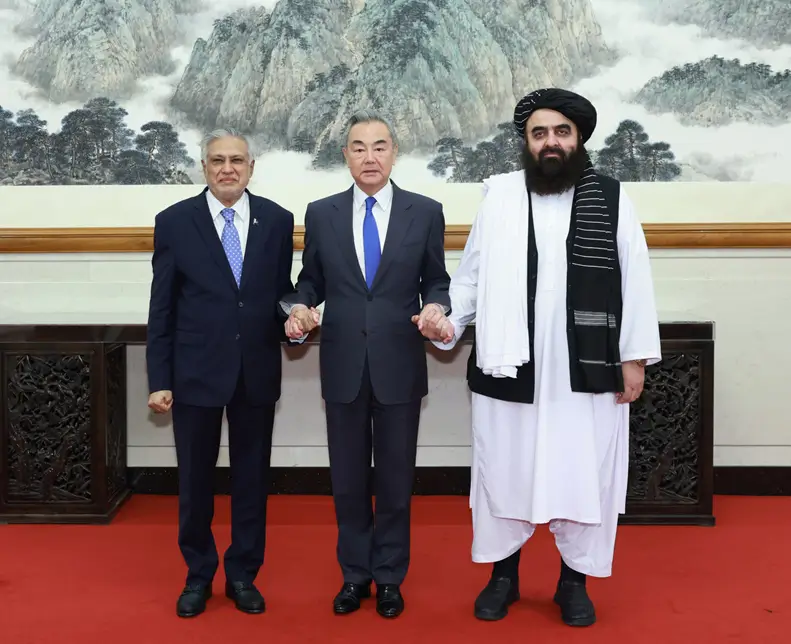
But things really ramped up when China became the first country to send a new ambassador to Afghanistan, in, I believe, September 2023. And then obviously things ramped up in earnest when China became the first country to accept a Taliban ambassador, who came to Beijing in late 2023 and presented his credentials in a formal ceremony to Xi Jinping, alongside some dozens of other diplomats. So from then China was really one of the only major actors in Afghanistan, and so they had a big first mover advantage, where you saw Ambassador Zhao Xing meeting with Taliban officials sometimes twice in a day, five times in a week, meeting with ministers of many different agencies.
And now the picture is looking a little bit different. So when the Taliban took over in, four years ago now, they said that China would be the Taliban’s greatest partner to rebuild the country. You don’t hear that language anymore. China is now described as one of Afghanistan’s most important partners. And the reason for this is that over the years that China has been engaged in Afghanistan, they have prioritized stability, security, they’ve prioritized expanding relations to the greatest extent possible while still taking on the lowest amount of risk. And that’s meant that they haven’t really had the level of investment and trade cooperation that the Taliban otherwise would have preferred.
And so now you don’t see quite as many public postings about official meetings between the ambassador and ministers. And I think a lot of that is because of the Taliban’s shifting priorities, where they are not just prioritizing China anymore, they’re prioritizing other countries like Russia, India, even the United States to some extent, trying to engage with Central Asian countries. And so I think some of it is the Taliban’s own diplomatic capacity, where they simply don’t have the resources to meet with every single actor all the time. But I think it also reflects shifting priorities for the Taliban in their relations with China, where China is no longer the only player on the ground there.
So I think that that’s the biggest shift that I personally have been tracking recently. But that’s not to say that China isn’t an important after still in Afghanistan. I think that the way in which China has brought the Taliban and Pakistan together recently is a great example of why China still matters. But I think the landscape does look different from even just last year, when China really was one of the only major actors on the ground. So I’ll stop there.
Akriti Vasudeva: Yeah, thank you Sarah. Very interesting. And Amina, I would want to bring you in on that at a later point, because one of the most significant decisions that came out of the China-Pakistan-Afghanistan trilateral was the raising of the Pakistan-Afghanistan relationship to the ambassador level diplomatically soon. So that at least was seen as a move towards legitimacy from Pakistan that we should definitely chat about later.
But I want to bring in Sibghatullah Ghaznawi here, going into our second theme of questions. This has come up already in the discussion on the importance of security guarantees, or the Taliban’s action against regional and global terror groups. And Sibghat, we’ve seen the Taliban vow to fight against ISIS-K. We have seen, obviously, Pakistani pressure on the Taliban to get rid of the safe havens that they claim exist, the Tehrik-i-Taliban Pakistan in Afghanistan. What is the status of action the Taliban has taken against these groups, and where do we go from here?
Sibghatullah Ghaznawi, Associate Research Scholar, Columbia University: Thank you very much. The security guarantees in the region, and also internally for Afghanistan, I would suggest that whenever we speak about security issues in Afghanistan and in the region, it would be a more useful discussion over the course of many researches around that region to take data-based and scientific approach, rather than the journalistic approach to the issue of the problem. When we change the lens of how we look intothe problem, then obviously the discussion changes to a different course.
When we look at the regional issues of terrorism and regional issues, or issues with the regional countries, I would speak specifically about India and Pakistan, the problems that Taliban are blamed for today, the Republic was blamed for before 2021. I think Amina Khan also pointed to it. These are problems that existed even before the independence of these two countries, and it continued after the independence. If we think about Kashmir or Balochistan or… many other insurgencies in both of these countries unfortunately have existed for last hundred or 80 years, not just for five years or 20 years. So that is one. We need to change the lens how we look into it and how we connect it to the problems in Afghanistan.
Another one is the internal dynamic of the insurgencies and internal dynamic of the terrorism in Afghanistan. If we look onto that, any government will take those risks more seriously because that destabilizes their own government and their own authority and challenges that, and that’s one of the reasons that Taliban have taken more serious actions against the ISK and other ultra-orthodox groups and not as serious as against the TTP.
A third dynamic that many times researchers and scholars overlook in their conversations is that the members of TTP or people who migrated after the operation of Zarb-e-Azb and other military operations in Pakistan, they belonged to the tribal belt of the Khyber Pakhtunkhwa province before it was called the federally administrator territory, FATA.
In FATA was one of the area that harbored or that hosted a large number of the Afghan refugees in 1980s and ’90s. And that was the time that these two communities developed relationships beyond the formal relationships that governments speak about. And those relationships still exist. So if a family was displaced from Miranshah or South Waziristan, Wana, and it is now hosted by a family that they hosted for 10 years in Paktika or Paktia, it becomes very difficult for any government inside Afghanistan to convince that family or convince that village to kick out that refugee family that has come from Miranshah.
So a more practical approach to this, this is required on the demand side, that how do the regional countries demand from Taliban or whoever? When we were in the government back in the Islamic Republic of Afghanistan, we faced the same accusations that in [inaudible 00:34:35] Paktika, the harboring of TTP happens. Well, the fact was that those were the community to community relationship, giving a good hospitality to the incoming refugees. So that is, again, a lens of how we look into it, that needs to be addressed.
On the international level, I’m seeing that international community seems to be happy with the status quo. The new technologies, expansion of network and AI, has increased capacityof the developed countries to monitor international terrorism and feel much safer compared to 2001 and 2002, and even till a few years later. So I don’t see much mobilization in the Western hemisphere with the narrative in rhetoric of the international terrorism emanating from Afghanistan. Another reason for this is that this is a two years ago report by BBC. They have developed a graph, it’s in the BBC Persian website, and the graph indicates very clearly that after the Taliban coming into power, the terrorist activities have decreased dramatically. So I believe that Western countries would have less interest in the international terrorism risk from Afghanistan.
A third dimension now to all this. Who loses in this context? We see the situation with the lens that is not conducive to any positive results, and Western hemisphere doesn’t have interest, regional countries do not have resources, so who loses? I believe now there is a time that Afghans, Afghan diaspora political groups and the Taliban, they need to reach to a consensus that they need to change the status quo for several reasons. One, the humanitarian situation and economy is not in good shape. With the influx of millions of forceful repatriated refugees in lasttwo years, that has further increased the burden on the economy. And second, human rights, specifically rights of women, not having access to education, that needs to be addressed.
Now on the women’s rights issue, again, my recommendation for ourselves in all these scholarly community would be that we need to change that course. Recently, spokesperson of the Taliban government was asked on this issue, and he very clearly said that “We define human rights with a different lens. We do not accept the definition that comes from the Western hemisphere.” Now they should be taken on this word. They should be hold accountable that first they should present that definition in the form of a book, or whatever they see it is necessary. Second, once that definition is there, then that definition either should be contested or they should be asked to fulfill their promises on those definition.
But problem is that the international community, regional countries, and the Afghan diaspora, we are sticking to the definition of the human rights that is Western, and many Taliban do not even agree to recognize it. So I think it is a complex situation, but regional consensus and consensus amongst Afghans and agreement on a principled approach, joined by all the political groups and political parties of Afghanistan, how to reach to the issues of Afghanistan, and then engagement of these groups by the regional countries, will be fruitful in the short term. Thank you.
Akriti Vasudeva: Thank you Sibghat. Amina,I know you need to leave, but maybe just to comment on the resurgence of the TTP and the potential support of the Taliban to that has been a source of tension between Pakistan and Afghanistan. We even saw Pakistan conduct cross-border strikes into Afghanistan earlier in the year. But there seems to have been a thaw in Pakistan-Afghanistan relations. Has Pakistan seen any meaningful action that the Taliban has taken on this course in the last few months that has made its change its approach?
Amina Khan: No, look, I do agree with Mr. Ghaznawi to a large extent, but since we are talking about the TTP post-August 2021, numerous reports internationally have spoken about how… the Afghan Taliban came into power, and hence I bring this question of security as a major irritant in the bilateral relationship, whether it’s now or in the past. Now, the Afghan Taliban clearly do have a relationship with the TTP, and they’ve never shied away from it. They’ve been quite open about it. And let’s not forget that they were the ones that were able to help broker a ceasefire between Pakistan, the Pakistani state, and the TTP, which lasted until October 2022. Apart from that, they have also offered to relocate the TTP, and recently in fact, we have had very positive statements coming out from the dispensation in Kabul, telling these particular TTPmembers that jihad or fighting in Pakistan is in fact against the Afghan Taliban’s overall regional policy, as well as it being against Islam.
Interestingly, even in Friday sermons, you have now many, many… you know, these Muslim clerics who are saying that they shouldn’t be moving towards the border and conducting strikes. So the whole point of mentioning this is that this just shows the leverage that the Afghan Taliban do have. Now I understand that it’s a difficult position that the Afghan Taliban are in, because yes, we talk about them being in power for four years, but I believe they’re still consolidating their position not only as the de facto government, but still as a group. And yes, there are many sympathizers with the TTP, but sadly this is a difficult decision the Afghan Taliban will have to make. If they want to be accepted as a responsible member of the international community, then there are certain norms and regulations that they have to adhere to, and one is the one that they themselves agreed to in the Doha Agreement.
Now, time and again we hear Taliban officials say that, well, that was something primarily between the Afghan Taliban and the Americans in terms of security, but I think security begins in the region. And also we have seen the Afghan Taliban taking concrete steps to address other countries’ security concerns, particularly when it comes to the ETIM and then ISKP. So here, I think this is a major irritant, but I do believe that there is a way forward, and both countries can address this issue bilaterally. After all, Maulana Fazl-ur-Rehman is the only other second person who has met Mullah Akhundzada. If you rememberm he went last year and met him regarding this whole TTP issue.
So I think there is ground for both countries to work on in this particular front. And here, let me just quickly point out that I don’t want to absolve Pakistan. I think when we say that the Tarikh e Taliban Pakistan, we should take ownership of the fact that they’re Pakistani, and we have to find an indigenous approach. And here this is not a very popular approach. I know that the TTP have been and continue to be responsible for some of the heinous attacks that we’ve seen in Pakistan. But I think we will have to take this approach of dialogue with some, and then kinetic operations towards others. So I do realize Pakistan’s responsibility, but we do need to accept that the Afghan Taliban do have a role to play here.
Akriti Vasudeva: Thank you so much Amina, and I know you have to leave, so thank you so much for joining.
Amina Khan: My apology. Thank you.
Akriti Vasudeva: Let’s move on to maybe talking a little bit broader from the multilateral environment. And Ambassador Ghafoorzai, I want to bring you in here. And you started to talk about this earlier, but maybe reflect on what have been the international community’s successes and failures in engaging with the Taliban post-2021, and especially in terms of ensuring accountability, whether it’s in terms of security or human rights, and where do we go from here? Oh, you’re muted sir.
Youssof Ghafoorzai: Thank you. Let me start by first repeating what I mentioned earlier. I think over the past four years, there has been enormous degree of compromise and flexibility, both on the part of regional countries, but also Western countries, for engagement, and then an expectation that such engagement will lead to positive results. But as I hinted earlier, four years on, I think the situation really speaks for itself.
I think one major gap over the past four years, both on the part of international organizations, but also countries that have influence on some regional or Western lack of political messaging to the Taliban, on having to accept a political process for a settlement that has eluded Afghanistan not just for the past 20 years, but 40 years now? I think that that’s very important. The recent UN assessment that was done under Security Council Resolution 2721, I think with that there was a lot of expectations, but also optimism among ordinary Afghans, that perhaps now the time has come for a new international strategy on Afghanistan led by the United Nations. And of course there was a resolution adopted for the appointment of a special envoy to lead a process that eventually results in Afghanistan’s reintegration of the international community. And I think the expectation there was that whoever that special envoy was to be, or hopefully is to be, should have a strong mandate to start a political process either to resume intra-Afghan negotiations or start a new framework for discussions that will eventually lead to a settlement that still is missing in Afghanistan.
In the security council, I think some of the things that we are hearing is that divisions among the P5, between the P3 and the P2 has prevented that special envoy being appointed. I think there has been rumors speculating that perhaps Moscow and Beijing, at the Taliban’s request, have put a hold on the appointment of a special envoy. I think the situation there is very clear, that if a special envoy is going to be appointed, he or she, one of the main mandates will be to start new negotiations or focus on a political process, and I think the Taliban are a bit concerned about that. So I think that needs to be corrected, and there should be consensus in the security council, a special envoy has to be appointed. Secondly, the other point that I wanted to mention was to highlight what Ghaznawi sahib had mentioned, was that we-
Akriti Vasudeva: I think we have lost Ambassador Ghafoorzai. We’ll wait for him to rejoin, but Sarah, I wanted to come to you to talk a little bit about the Chinese perspective of this, especially considering the China-Pakistan-Afghanistan trilateral forum that happened in May. What is China’s approach to both securing its own interests in the region, but also thinking about Afghan stability in ways that China can potentially push for some of these accountability mechanisms in Afghanistan?
Sarah Godek: Sure, happy to talk about that. So I think in terms of securing China’s interests in Afghanistan, I think that China has a dual track approach. One of them is to engage bilaterally directly with the Taliban, recognizing them as the power on the ground. And so I think for them it’s a matter of trying to engage as much as possible. So you saw a lot of efforts last year in November of engagement not just with Kabul, but also with Kandahar, trying to ensure China’s security interests. And I think that there’s also levers that China uses to try to put a little pressure there. So when things are not so good, there are statements that are issued showing that the security situation is not that great. There’s some Chinese analysts who actually believe that the Taliban has not done enough with respect to terrorist groups and preventing the overlap of these groups, which they claim share training camps, channels of recruitment.
And so I do think that there is still a lot of concern there, but that’s the bilateral engagement approach, is trying to ensure that they have someone to talk to if something does happen. But China does in official statements maintain that the security situation in Afghanistan is generally stable. That’s something that they’ve said in UN statements for the last many months now. But they still need to be able to engage should issues arise. But then there’s also the multilateral track engagement. So I think that’s a big driver of the recent trilateral that you mentioned. There’s actually going to be a formal meeting of the foreign ministers of China, Pakistan, and the Taliban foreign minister in Kabul on August 20th. And that meeting will be focused on security issues, because when Pakistan-Taliban relations are not good, when there are cross-border attacks, that is not good for China’s security interests, not just in Afghanistan, but also in Pakistan too. And so I think that that’s a big impetus behind this trilateral engagement.
But they also are not just engaging in this trilateral way, they’re also engaging a lot of the regional actors, so they’re engaging a lot of Central Asian countries. So I would describe China’s multilateral approach to engagement with Afghanistan as being very supportive of trying to include the Taliban where possible, but a little bit more reluctant to actually host. So there hasn’t really been a lot of multilateral engagement where the Taliban has gone to China to engage in formal meetings. Even the trilateral in May was described as an informal meeting. So I do think that there has been a little bit of hesitancy on China’s side to look like they’re granting too much recognition to the Taliban. I’ll stop there.
Akriti Vasudeva: Thank you so much, Sarah. Ambassador Ghafoorzai, we’d lost you, but you back now. Do you want to continue with the train of thought that you had?
Youssof Ghafoorzai: Yes. Yeah, thank you. My apologies for a technical issue there. Again, just a follow-up on what Ghaznawi had mentioned. I think the importance of regional countries also expanding dialogue and engagement with a diverse set of political actors both inside Afghanistan and outside Afghanistan.
I think because of proximity, I think regional countries do have influence on the Taliban’s decision-making, and I think moving forward, as the UN is trying to regain its role to start a serious process in the country, I think it’ll be important for regional countries to convey the messaging in their interactions with the Taliban that a political process should be a priority.
Of course, there’s the UN mosaic approach that’s been presented now. I think that will be the main framework for the UN’s activities, and I think for the regional countries to be on board and to encourage the Taliban to allow representation from civil society, from representatives of different political groupings inside the country and outside? I think that will be important.
Akriti Vasudeva: Thank you very much, Ambassador Ghafoorzai. And Shalini, I want to bring you in here, because India’s a very interesting case where it has always insisted on that political process, inclusive governance, rights of women, has almost had a moral view of the situation in Afghanistan, even while continuing the people-to-people connections. But we’re also seeing this pragmatic approach in recent months, especially with potential concern for Chinese engagement in Afghanistan.
So how is Delhi thinking about engaging the Taliban in Afghanistan? Especially as it looks at the China-Pakistan-Afghanistan trilateral, these other regional actors trying to increase space and influence in the region. So how does it think about its strategic ambitions vis-a-vis Afghanistan, but also the legacy of humanitarian involvement and speaking up for the people of Afghanistan? Shalini, you’re on mute.
Shalini Chawla: Yeah. So yeah, you’re right that India has been talking about… our ties with Afghanistan have been mainly, we would say, marked by people-to-people connect that we developed the software that India cherished there, and also the connections that have been there through generations. So that has been one of the strength of the relationship. But after the Taliban took over, I think there was a realization that Taliban are here to stay. There was no optimism in terms of that the change is going to happen. So this was a very strong realization that people are going to stay, Taliban are here to stay, and India did not want the past investment to go in vain. And obviously your strategic security concerns are high. So taking into consideration all of these issue, I think a mid way, somewhere that pragmatic approach was initiated, has been initiated.
And if you see India’s engagement even now, all the steps that India has taken are for the people. So for example, we started with the humanitarian assistance, and then it kind of went ahead into the drugs issue, education, and then also some trade on the Attari border has been started, while trade with Pakistan is not there. But yes, the Afghan trucks, I heard were allowed to come into India. So even through this form of realistic engagement that India started, the emphasis has been quite a bit on people. And then we have started the new visa policy, which includes, again, students. It’s mainly for medical, nurses, and some business areas also have been covered. So I think even with the expansion that we might see in terms of space of engagement will be towards benefiting the people. And obviously it becomes a base there.
Now, how do we see the other regional actors? And in that case, Pakistan becomes important for us, and this is something Pakistan and Afghanistan ties have been obviously critical in this whole respect. And there is a speculation that India’s Afghanistan policy’s thriving because of Pakistan’s strained relation with the Taliban. So I would say this is not the factor, but it is certainly a contributing factor. So definitely India did have an ease of engagement with the Taliban, given the strains in the relationship, and there has been reluctance on part of Pakistan to facilitate the humanitarian assistance to Kabul. So that part also, India has been trying to deal with.
In terms of the trilateral, China, Pakistan, Afghanistan, yes, the trilateral, as Sarah’s told, it’s something we have seen the shades of this trilateral in the past, and it’s a good thing that China has done that and it would want the tensions between Pakistan and Afghanistan to ease out. But how much the trilateral will actually bring to the table is something we all need to see, given the history that we have seen. And China’s engagement obviously has different shades, which Sarah talked about, but India certainly is watching these developments, I would say, very clearly. But I don’t think Afghan-India relationship will get affected at this point in time with these trilateral or any other bilateral engagements.
I think this I feel because of two reasons. One is that what India offers to Afghanistan with its engagement, I think that’s much deeper as compared to what China can offer, given the cultural and civilizational links and the people-to-people connect that have been created over generations with Afghanistan. And secondly also that what we have seen in Taliban and [inaudible 00:56:47] they have adopted an approach of foreign policy which suits their interest. So they are obviously playing a smart policy and economically driven policy, which I feel is very transactional in nature, where they have offers of guaranteeing security, controlling ISKP, ETM, not allowing the spillover of extremism, and also reserves of minerals, even some of the relationships have played on.
So I feel that Taliban are very keen to engage with all the regional actors, as I think Sarah also talked about it, that they are very open to all the engagements. So I think the impact on India-Afghanistan relationship, India doesn’t feel will be there because of these trilateral or bilateral engagements. But yes, these are the developments which are watched very cautiously in New Delhi, for sure.
Akriti Vasudeva: Thank you so much Shalini. And I want to start bringing in some audience questions here, and Sibghat, maybe to you first. We were already talking about this, but one of the significant discussions in the Pakistan-China-Afghanistan trilateral in May was continuing conversation about the extension of CPEC to Afghanistan. But that has been a challenge because of the security situation in Afghanistan, in Pakistan as well. But what are really the realistic prospects for Afghan connectivity with CPEC, and this is a question from Ajaz Rashid, and how can it potentially impact Pakistan-Afghanistan relations?
Sibghatullah Ghaznawi: Thank you. I think the future of the relationship in that region, specifically for Afghanistan and Pakistan, that is through initiatives that are based on trade and prosperity in longer term. If we look to the history of this region, the era of the Mughal Empire comes to mind, how it increased GDP of India as a whole that included Pakistan and many parts of Afghanistan back then. One reason of that higher and bigger economy was that the Indian economy was integrated with the Central Asian economy, and the trade and expertise were flowing independent of the political situations in this region. So looking to that, the potential of this region, India, Pakistan on one side, Central Asia on the other side, and Afghanistan in the middle, it is a very huge… It can create a big economy and a huge prosperity dividend to the people.
So, how practical it is. Practically it is very possible. It was possible even before. It just needs political will on the side of depoliticizing this issue. When I look to the trade issue and I look to the trend that has been taking place in the last 25 years, not just [inaudible 00:59:57] years, on the Pakistan side, trade has been repeatedly politicized and linked with the political issues. If we look to the graph of the border closure, there are these five checkpoints for across two nations the trade. It has been closed during October and November, and that’s the time when fruits are ready for sale in Afghanistan, and then border gets closed.
So removing politicization from the trade on both sides. CPEC is practical, and CPEC can change actually the political relationship in the national narratives of these countries. And once that happens between Afghanistan and Pakistan and a stronger trade tie in connecting Pakistan with Central Asia, it will also strengthen Pakistan’s position to be not afraid of India. Right now, if we look to the internal narrative in the Pakistani media and politician, a fear exists in Pakistan when it comes in its relationship with India. If Pakistan is in a stronger regional position in terms of trade and business, it will have a better opportunity to come in good terms and friendly terms with India. And I think in that case, India will also have an opportunity to benefit from this relationship also with Central Asia. So I think CPEC is a very positive and practically doable approach for improvement of the region’s security and stability.
Akriti Vasudeva: Sarah, I want to bring you in quickly before we go to our last theme of questions here, on this question of how China looks at the expansion of CPEC into Afghanistan, and to what extent is China watching or looking with interest at India’s connectivity projects in Afghanistan and moving over to Central Asia?
Sarah Godek: I definitely think that that’s a huge impetus behind China pushing for better Taliban-Pakistan relations. I definitely think that China views India’s relations with the Taliban with a bit of concern. Because CPEC has been promised since 2016, the CPEC extension, and it’s nearly a decade later and we have yet to see it. But there is a recent development that there was an MOU signed between Pakistan and the Taliban on feasibility studies for the Trans-Afghan railway, which would hopefully link CPEC to Chinese rail in Uzbekistan. And I think that that is a development that shows that there is an interest in forward motion.
But I think that something interesting here is that the Taliban itself does not actually consider itself part of CPEC, I don’t think. Because whenever you see articles about CPEC, they always include the caveat that Afghanistan is not yet part of CPEC. And when there was a really interesting interview last year between TOLOnews and China’s special representative, there was some really interesting back and forth between the two on whether or not Afghanistan would be included in the BRI, and what that process actually looked like. It’s very nebulous. What does it mean to be a member of the BRI? What does it mean to be connected to CPEC?
And so I think that the proof is really in the pudding, and I think that it will really, for me, depend on whether track actually is laid for this rail. And I think that that’s when I would be able to say that yes, China is truly invested in extending CPEC. I mean, obviously there is, I believe, a Chinese rail company that is involved in some of these discussions, but again, it has to do with China’s risk profile, where they are concerned that such rail could be a target. And so that’s something that they have to weigh very critically, and Chinese analysts, I think, unanimously agree that the success of any kind of extension is going to be related to whether the security situation is preserved. But definitely in making these moves, I’m almost certain that China is keeping India in mind, for sure.
Akriti Vasudeva: Thank you Sarah, and that was a question from one of our audience members.
I want to come to our last theme of questions here, and borrowing from one of our audience members, Amina Munir, it seems that regional countries have approached the Taliban with selective pragmatism over the past few years in trying to secure their interests. But in some ways, the accountability portion of what the international community or the regional community talked about vis-a-vis Afghanistan and peace and stability in the country seems to have gone away as a conversation.
So I want all of you to maybe reflect on, what is the leverage that the international community still holds over the Taliban, obviously in terms of assets and resources, but how can it push for securing some of the important milestones that Afghan people would want vis-a-vis the Taliban, but also in cases of regional countries securing their own interests with the country?
Shalini, we’ve talked about before where the inclusive governance and aspect and role of women and girls in Afghanistan has been important too to India, and Sarah, for China, that would be from a security point of view or from an economic point of view. And Ambassador Ghafoorzai and Sibghat, obviously the conversation about the political process and dialogue in Afghanistan would have to factor into these calculations.
So I’ll come to each of you. Reflect on what leverage the international community or the regional countries hold in having the Taliban be accountable on some of these factors. Ambassador Ghafoorzai, we’ll come to you first, then Sibghat, then Sarah, and then we’ll end with Shalini. You’re on mute, sir.
Youssof Ghafoorzai: First and foremost, I think it’s absolutely critical that regional countries avoid official recommendation of a Taliban regime until all outstanding issues are addressed. Of course, the Russian Federation has taken a decision already, but the hope– and the expectation is that there won’t be any additional decisions until and unless all outstanding issues are addressed.
I think in terms of leverage, one point of leverage that the international community, both Western countries and regional countries, have not utilized so far, I think is engagement with a broad spectrum of Afghan political actors. I think anytime there’s a meeting or a gathering of non-Taliban groups, be it civil society or representative of traditional political parties or newly established political parties abroad, almost immediately you see a reaction from Kabul. So I think that is a point of leverage that should be used. And I think engagement with a broad spectrum of political actors will have three benefits.
First, I think it’s going to send a political message to the Taliban that you can be part of this solution but not the solution by yourself. Secondly, it will help mobilize a spectrum of Afghan political actors in the event that there are potential negotiations or resumption of negotiations down the road. And third, the situation in Afghanistan is very unstable. I think it’s difficult to leave out any eventualities. I think it’ll be important to fill a vacuum in the event thatthings become even more complicated, that there is an alternative. I think that’s an important issue that has to be looked at from here on.
Sibghatullah Ghaznawi: Thank you. I think the leverage that international community has on the Taliban, I consider that the 2020 first, beyond these last four years, it’s continuation of the last 20 years. And in the last 20 years, war was the last resort of leverage. When money, negotiation, nothing works, then powers decide to go to war. And even war didn’t work against the Taliban. So I think international community under the current status quo has lost its leverage with the Taliban. But thinking of the regional countries, considering the potential of the trade and internal stability of Afghanistan, regional countries have a bigger leverage and linkage to the Taliban.
Another point I would like to add to the international community’s leverage. United States has been leading the rest of the developed world in post-Second World War era, and United States has decided to cut off all the mechanisms of leverage and linkage that it had like USAID, USIP, donating to international aid agencies. And once those linkages are gone, then leverages diminish automatically. I think there is a good body of academic literature on the leverages and linkages, how they work.
Again, coming to what Ghafoorzai sahib mentioned, the engagement of broader Afghan political and civil groups, that has another importance, and I believe that regional countries must bring it onto the table of discussion with the Taliban that Afghanistan’s today stability, or whatever stability exists on the ground under the Taliban government, is very similar to what existed under one person rule or one political group rule in the past hundred years, and it was always very volatile. And this should be brought to the table, that Taliban may seem very strong today, but they’re not more stronger than the kingdom of Abdur Rahman Khan or Nader Khan or whoever was there before. But those people, not having participation of the general public in the civil society and the governance, were not very stable in the long run. Thank you.
Akriti Vasudeva: Thank you so much. And to Sarah and Shalini, I also want to, in addition to the question that I already asked, maybe address if or how China and India may move to official recognition of the Taliban. What would be the parameters, or what would be required, essentially, to move to that pathway?
Sarah Godek: Yeah, first I just want to say that I totally agree with Sibghatullah that the international community has lost a lot of its leverage, the US has lost a lot of its leverage. But I think something interesting about the US that it still has as leverage is the perception by other countries that the United States could enact negative consequences on countries that recognize the Taliban. I think that this is actually part of China’s calculus in moving to recognize the Taliban, if they were to. I do think that there’s right now a good amount of concern as to how the US would react, and what consequences they would attempt to impose on China or any other countries that did so.
So I think for China, I don’t think that China was ever going to be the first unilaterally, because it has to do with what’s in it for China, and I think the costs of initial recognition were simply too high. I think it would be better for China to recognize the Taliban with other countries. From their perspective, I think it would be better if at least more regional countries were on board. I think that to take a step when other regional countries were not very comfortable with that? I don’t see China doing that, because they wouldn’t want to hurt the relationships with the regional countries with whom they’re trying to cooperate very closely on Afghanistan.
So I think the leverage that China has… Currently I think it’s interesting, because recognition is and is not leverage, because at the moment they’re walking this fine line where they didn’t really disrupt diplomatic relations, so in some ways that removes the need to issue a statement of official recognition. If diplomatic ties have not been disrupted, then what is to recognize? I think that’s the fine line that they are walking right now, but that also removes a little bit of their leverage.
I think their traditional formulation for leverage of building up economic ties and using that as a pain point to create leverage on the Taliban? I don’t think that that’s working for them, and I think that we’ve seen any kind of delays on projects has gone negatively. So I don’t know that they’re able to quite use the same level of economic engagement as leverage that they use with some other countries. And I think it’s challenging, because in order to build up more of that leverage, they would need to engage in more investment in trade, but that comes with security risks. So I think that China is really trying to think about what is its actual leverage over the Taliban government, and that’s a question, I think, that they’re still grappling with.
Akriti Vasudeva: Shalini, last word to you.
Shalini Chawla: Yeah, so you are absolutely right, Akriti, in terms of the engagement of the country. So what always we see, that while there is commonality of challenges, which all the regional countries, if I’m talking about, they face vis-a-vis Afghanistan, there’s no commonality in terms of approaches, there’s no commonality in terms of… because the bilateral strains just overshadow everything, and then it’s all about just having a relationship with Taliban individually, which the countries have pursued.
Now the leverage that India can have, I feel too, which, I’m just thinking out of the box, but yes, India’s leverage, I think in today’s time, would be its economic growth and how Afghan Taliban and Afghanistan can actually benefit with that whole growth. India’s pipeline, we have too many projects which were there, which are already halfway through. So revival of India’s project is a big leverage that India has, because that revival is going to generate immense amount of employment revenue, and it is something that India has a massive potential as compared to any other country that we see.
The third point, which might not be very welcomed, but yes, I think India can have that leverage of offering the Taliban to build up its, maybe the security apparatus, and build them as maybe the partner in terms of the capability buildups in terms of the counterterrorism capability. So that could be one leverage that India can exercise. But India’s projects there is, I think, the biggest leverage that India has.
Where will India go, and how far will India go, in terms of recognizing them? I think, Akriti, that is a long way to go. So India will still take some time on that, and that’s going to be a slow process, and I think India’s very much on board with the international community on that. But the second point on that issue is that my feeling is that after what Russia has done, we will see different models of engagement which are not full recognition to the Taliban, but which kind of gives them more legitimacy. So how much will Taliban actually then demand for the full recognition is also, all of us need to think that will they be now needing that recognition if countries develop a different set of models in terms of engaging with them and providing them more legitimacy?
So it is quite uncertain. But yes, we will have very interesting dynamics emerging in the coming time, I feel, after Russia’s step. Yeah.
Akriti Vasudeva: Thank you so much, Shalini. That was a very salient point to end on.
I want to thank all of our panelists for joining us and for their insights, and to everyone who joined this discussion from the audience. We will continue to feature much more analysis on Afghanistan and the rest of the subcontinent and South Asian voices, so please do check out our website, www.southasianvoices.org for both this series as well as other content, and we will see you next time for another South Asian Voices webinar. The video for this event as well as the transcript will be both on the Stimson website, as well as South Asian Voices.
So thank you again. Have a good evening, good morning, good afternoon, wherever you are.
Shalini Chawla: Thank you.
Youssof Ghafoorzai: Thank you.
Sarah Godek: Thank you.
Akriti Vasudeva: Until next time.
Shalini Chawla: Thank you everybody.