
From 29 July to 1 August 2025, the city of Nairobi played host to the Africa Regional Meeting of the Atlas Liberty Forum, an annual gathering convened by Atlas Network to promote liberty, democracy, and free-market solutions across the continent. The forum brought together over a hundred participants, including think tank leaders, civil society actors, youth advocates, academics, and international development partners. It provided a timely platform for cross-border collaboration, strategic reflection, and capacity strengthening.
The opening two days featured the Marcom 360 course, a strategic communications training designed specifically for think tanks. IMANI’s Multimedia Administrator, David Kukuia-Galley, participated in the course, which addressed critical aspects of policy communication, including message clarity, audience segmentation, brand alignment, emotional resonance, and metrics for impact evaluation.

“The sessions were both practical and strategic, providing the tools we need to sharpen think tank engagement and ensure our ideas continue to influence public policy and discourse across Africa” – David Kukuia-Galley
Conference Sessions: Day One – 31 July 2025
The official conference began on 31 July, and it was a proud moment for IMANI as our Programme Manager, Josephine Adjei Tenkorang, took the stage to deliver one of the most forward-thinking presentations of the day. Her session focused on what liberty-minded organisations in Africa must start doing, what they need to stop, and what should continue.
Josephine spoke from the heart and experience. She challenged organisations like ours to stop speaking only to people who already agree with us, and instead focus on reaching new audiences. In particular, she underscored the importance of connecting with young people on university campuses, who are often at the forefront of social and political transformation these days. This point hit home for many in the room, as she pointed to IMANI’s outreach work in Ghana as an example of how to engage students meaningfully.
She also urged the think tank community to start closing the generational gap that too often exists within liberty movements. Her call was clear: “If we want our message to resonate in the present and remain relevant in the future, we must intentionally bring in the Gen Zs; not just as followers, but as co-creators and leaders.” She stressed the need to meet them where they are, especially in digital spaces, and give them a real seat at the table.
Another powerful takeaway from Josephine’s address was the call for financial independence. She encouraged think tanks to rethink their funding models by building trust-based relationships with individual supporters who share our values. This approach, she argued, requires transparency, storytelling, and a strong sense of purpose.
Josephine closed her presentation with a passionate appeal for internal investment. “Young professionals within our organisations bring fresh thinking and energy; to truly move the liberty agenda forward, we must involve them in shaping strategy, not just executing it”.
This session concluded with a vibrant panel discussion moderated by Kavuka L. Kiguhi of Africa Students for Liberty. It featured reflections from figures including Rejoice Ngwenya of COMALISO and Lanre-Peter Elufisan of the Ominira Initiative. Their discussion tackled both the promise and the practical challenges of implementing the ideas presented.
Democracy on the Frontlines: The Role of Authors and Think Tanks
Later that afternoon, our Vice President, Selorm Branttie, participated in a critical panel discussion on the future of democracy in Africa. As a contributor to the recent book “The Future of Democracy in Africa”, Mr Branttie joined peers Primus Tazanu, Nkafu Policy Institute (Cameroon), and Kouakou Donatien Adou, Director, Good Governance Division, Audace Institut Afrique (Côte d’Ivoire) to reflect on the threats and opportunities facing democratic governance on the continent.
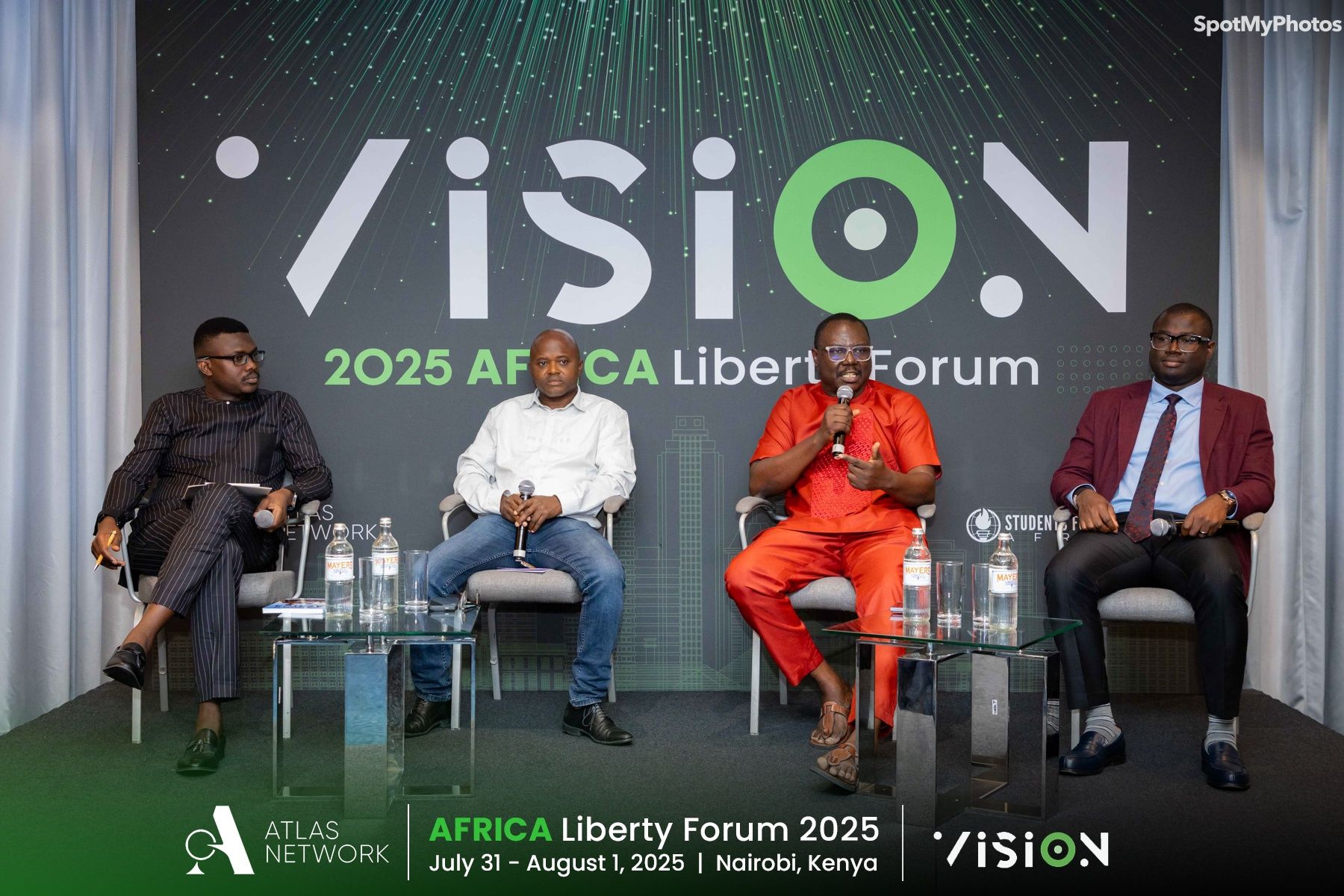
Mr Branttie’s contribution was grounded in Ghana’s experience, but his message resonated across borders. He focused on the growing political consciousness among Africa’s youth and the need for institutions to catch up with this shift. Drawing on recent movements such as #FixTheCountry in Ghana, #EndSARS in Nigeria, and the Gen Z protests in Kenya, he made a compelling case for why governments must respond to the demands of younger citizens with transparency, humility, and accountability.
He firmly opposed the trend of internet shutdowns during times of civil unrest, highlighting its massive economic cost and the clear violation of civil liberties. These shutdowns, he argued, not only undermine trust but also harm national economies, often costing approximately ten million dollars per incident.
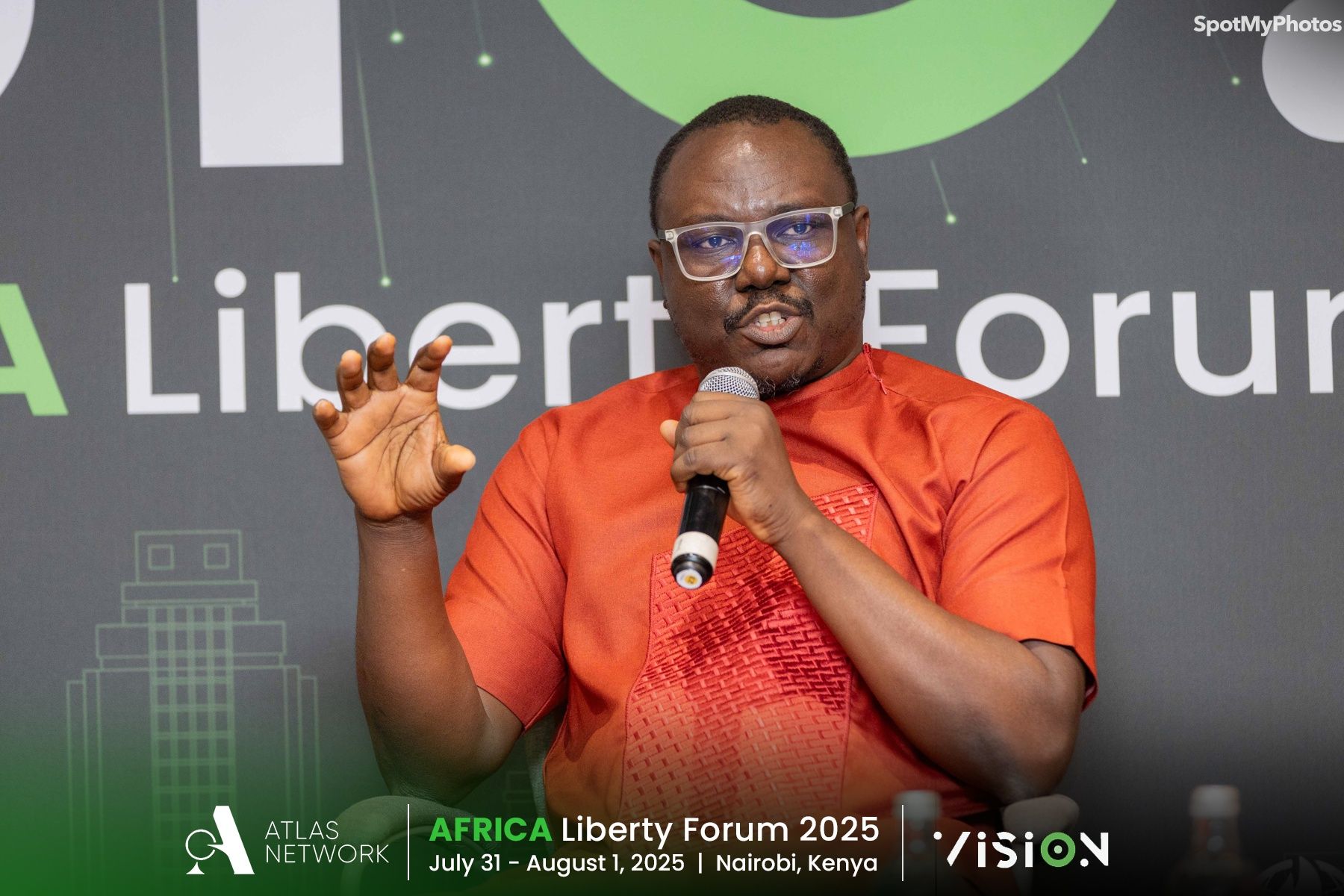
When asked about the controversial proposal to eliminate presidential term limits in some countries, Mr Branttie offered a direct response.
“NO! If a president needs more than the time given by the constitution to change the fortune of a nation, then that leader has failed,” he said.
He cited the Singaporean model to show that impactful leadership is about ideas and systems, not about individual rulers clinging to power.
He concluded by reaffirming the centrality of youth inclusion in Africa’s political and governance processes, noting that any future vision for democracy must prioritise the demographic that constitutes over 65 per cent of the continent’s population.
Additional Highlights and Dialogue Sessions
Parallel sessions provided opportunities for more targeted engagements. The IMANI team participated in a workshop on training strategy led by Olufemi Ogunjobi and Dumebi Mercy, and also attended a presentation by Olumayowa Okediran and Judie Kaberia on the role of economic freedom in shaping Africa’s foreign policy priorities.
A keynote luncheon discussion between Feyisade Adeyemi and former Chief Justice of Kenya, Willy Mutunga, provided historical insight into Africa’s freedom movements and examined their ongoing relevance. Their conversation reinforced the importance of learning from past advocacy efforts while adapting to the present context.
The day concluded with a networking dinner hosted by Kavuka L. Kiguhi and Atlas Network President, Matt Warner. This offered participants an informal platform to build strategic relationships and share reflections across national and organisational lines.
Awards and Recognition: 1 August 2025
The final day of the forum featured two flagship events. The first was the Africa Regional Smart Bets Pitch Competition, where three finalists presented their projects. Kathya Berrada from the Arab Centre for Research was announced as the winner and awarded a prize of 65,000 US dollars, along with an opportunity to participate in the global final in New York later this year.

The second was the presentation of the Africa Liberty Award, part of the Templeton Freedom Award programme. This year’s winner, the Institute of Race Relations from South Africa, was recognised for their project “Champions for Growth”. Through a series of eight policy papers promoting market reforms, they achieved a breakthrough: for the first time, South African government ministries adopted and acted on their recommendations. It was a clear example of ideas turning into impact.

Conclusion
IMANI’s active participation in the 2025 Atlas Liberty Forum reaffirmed its commitment to advancing liberty, democratic accountability, and policy innovation across Africa. Through structured training, strategic dialogue, and collaborative engagement, we strengthened our institutional capacity and expanded our network of partners committed to similar values. The forum offered not only a platform for knowledge exchange but also a space for reflection and forward planning. We return home not just inspired but equipped, with new skills, fresh strategies, and deeper partnerships. Liberty is not an abstract ideal. For us, it is a daily commitment to expanding opportunity, defending democratic space, and preparing the next generation to lead Africa forward.
By David Kukuia-Galley