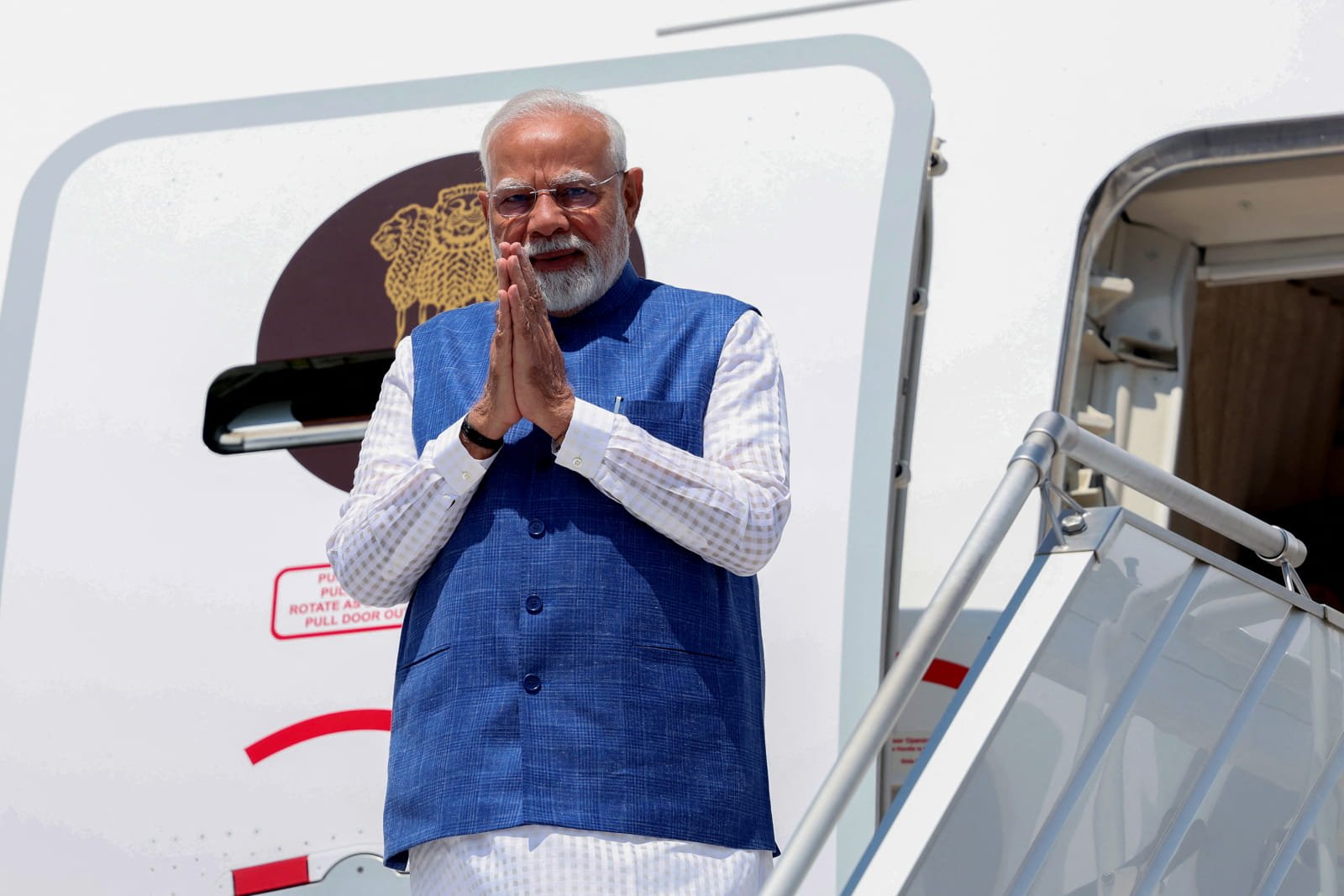
It appears likely that India’s Prime Minister Narendra Modi will participate in-person at the Shanghai Cooperation Organisation leaders summit in China later this month. A visit to China would be Modi’s first trip to the country following the military clashes at Galwan in Eastern Ladakh along the Line of Actual Control (LAC) in 2020, which cost the lives of 20 Indian soldiers and at least 4 from China. Modi’s in-person participation at the SCO, his first since 2022, would hint at the evolving importance of the group for India.
India’s Ministry of External Affairs has noted that Modi’s participation at the SCO Council of Heads of Government meeting, scheduled for 31 August–1 September, is under consideration. External Affairs Minister Jaishankar visited China last month, during which he called on senior Chinese officials including President Xi Jinping and Foreign Minister Wang Yi and attended the SCO Foreign Ministers meeting. Jaishankar in his meeting with Wang Yi raised key issues including sharing of hydrological data, trade restrictions, de-escalation along the LAC and called for an ‘uncompromising’ stand against ‘terrorism, separatism and extremism’ at the SCO meet. This appears to have paved the way for Modi’s participation later this month.
A visit would be a positive step forward in what appears to be a thaw in ties and provide the opportunity for talks with China’s President Xi Jinping. The last meeting between the two leaders took place on the sidelines of the BRICS Summit in Kazan in October 2024.
Modi’s participation will still be against a backdrop of sharp differences of view.
The visit will also take place in the shadows of India confronting increased pressure from Western allies about oil purchases from Russia and the Trump administration’s imposition of tariffs on New Delhi. US ties with Pakistan have also rankled India.
In this context, even a temporary recalibration in ties with China will allow India to hedge against the United States.
India is also keen to boost its role in international summitry as it prepares to take over as chair of BRICS in 2026, an organisation that includes Russia and China. India wants to drive a ‘humanity first’ approach for BRICS and deems as important the participation of Xi and Russian President Vladimir Putin at the summit next year.
But Modi’s participation will still be against a backdrop of sharp differences of view. Following the Pahalgam terror attack in April and subsequent clashes between India and Pakistan, a senior Indian military general accused China of using Pakistan as a “borrowed knife” to “inflict pain” on India amid suspicions that the conflict served as a “live lab” to test weapons and tactics.
Modi is likely to deliver a strong message on combatting terrorism, highlight its importance as a founding objective of the SCO and underline a tough stance on cross border terrorism. His address will be delivered in the expected presence of Pakistan Prime Minister Shehbaz Sharif, soon after the May conflict known as Operation Sindoor.
New Delhi has been an active participant in the SCO and its engagement with the group is reflective of the broader recalibration of India’s foreign policy priorities. It demonstrates the Modi government’s strategy of multi-alignment with the Quad, SCO, BRICS, G7 and underlines its intent to practice strategic autonomy while remaining outside bloc politics. Furthermore, it provides India a policy space vis-à-vis China, Russia, Iran and some Central Asian countries to continue dialogue at the highest political level.
India’s priority to secure consensus on cross-border terrorism emanating from Pakistan may not find the due support at the forthcoming summit. China’s double talk on the matter is evident from the ministerial level meetings leading up to the Summit. Iran’s position too remains ambivalent as India distanced itself from the SCO statement in June denouncing Israel’s attack on Tehran. Yet, Modi’s presence at the Heads of Government meeting alongside Xi and Putin will be ideal for optics of India’s great power ambitions and positions itself as Vishwabandhu, or friend, in a divided world.